
2026 Quantum Industry Predictions: Entering the KiloQubit Era
2025 delivered very strong proof points on the path to quantum utility: error correction and investment trends showed capital underwriting quantum at data-center scale.
2026 is when the industry gets judged on market execution: who will turn momentum into scalable infrastructure and put quantum capability in the hands of the teams chasing the next wave of fundamental discovery?
- Strengthening Supply Chains Becomes a Strategic Priority
2025 was the year “bigger” stopped being a slogan and started showing up in hardware roadmaps. Fujitsu and RIKEN scaled from 64 to a 256-qubit superconducting system and publicly scheduled a 1,000-qubit machine for 2026. IBM’s roadmap pointed to multi-chip scaling, including a 1,386-qubit “Kookaburra” processor and a 4,158-qubit system by linking three chips. And Google’s Willow work reinforced that the next era is about scaling error correction on real superconducting hardware. The net effect: more teams moved from experiments to large-scale deployments.
That sets up 2026 as a supply-side test. “When more organizations are building multiple systems, demand shifts from “one flagship chip” to steady throughput: development lots, replacement units, iteration cycles, and enough packaging/integration capacity to keep programs moving.” - said Matt Rijlaarsdam, CEO & Co-founder of QuantWare. A strong signal of how broad the builder base has become: Quantum Machines reported its customer base exceeds 50% of companies developing quantum computers. In 2026, buyers will pressure-test the unglamorous constraints that decide who can deliver: yield, supply assurance, packaging capacity, and ramp speed without performance compromises, because scaling now means repeatable manufacturing, not heroic one-offs.
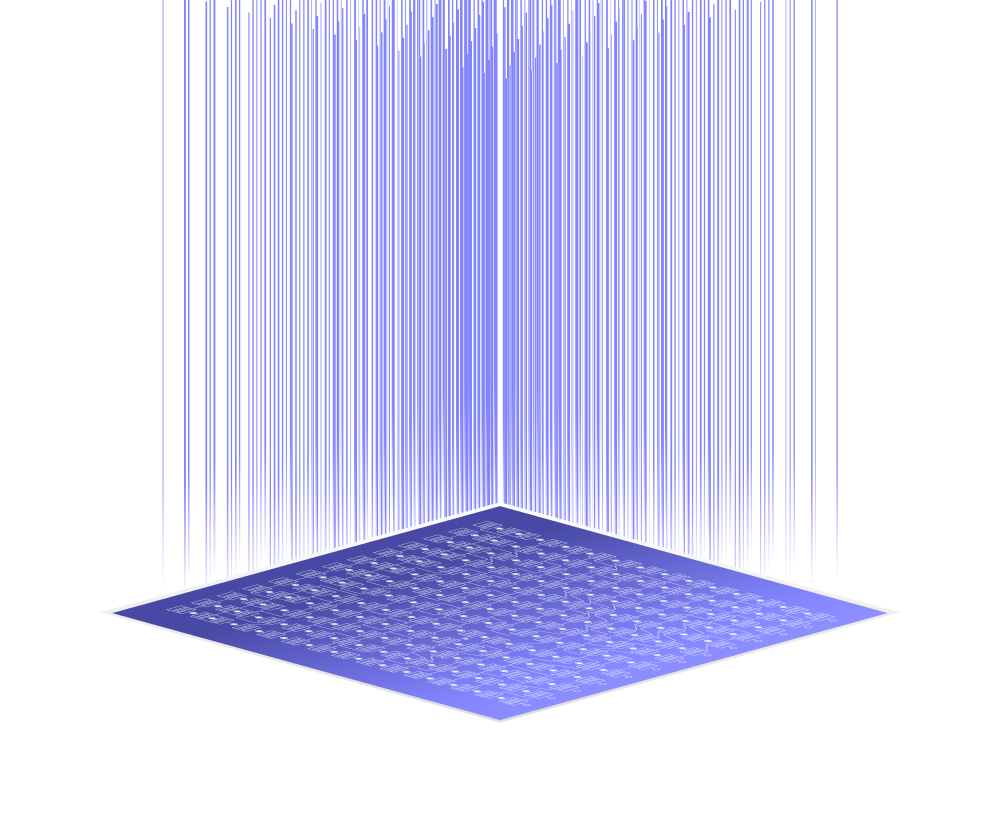
“This is exactly why QuantWare built KiloFab, our industrial-scale QPU fab scheduled to open in Q1 2026 to manufacture VIO-40K processors at scale. KiloFab is the world’s first dedicated fab for Quantum Open Architecture (QOA) devices, and one of the world’s largest quantum fabs, that turns KiloQubit processors into a reliable supply reality.” - Matt Rijlaarsdam, CEO
- More Qubits: All About Scalability
This is where the uncomfortable physics of “just connect more qubits” shows up. Connectors don’t scale. Traditional approaches rely on fanning signals out from the chip to the outside world through bulky wiring and interfaces. But once you fan out, you can’t fan back in at high density without running out of space, adding complexity, and turning your cryostat into a thermalization and routing nightmare.
The problem isn’t just electrical, but geometric: IO footprints and interconnect volume grow faster than practical cryogenic packaging can support. That’s why the industry is converging on deeper integration approaches: architectures that treat interconnect and packaging as first-class design constraints, not afterthoughts.
- Lower Qubit Counts Required for Applications
Resource estimates like Gidney’s “RSA-2048 with <1M noisy qubits” do more than stir debate, they sharpen what “serious” scaling looks like: orders-of-magnitude growth that can’t be achieved with non-integrated, connector-heavy system designs. In 2026, expect more resource estimation papers and more credible application targets to emerge. These are two curves that approach each other: increases in hardware size and decreases in required hardware size.
- The Hardware Race Widens But Only Scale Survives
More modalities, be they superconducting, trapped ions, neutral atoms, or photonics, will continue to put up impressive numbers. But in 2026, the platforms that break away will be the ones that can demonstrate repeatability and integration discipline, not one-off hero implementations: consistent performance across many devices, predictable calibration/operations, and a system design that can be manufactured and deployed without hero-level engineering each time.
This is the real pivot from “innovation” to “industry.” In the utility era, success is shifting from “who can build it once” to “who can build it reliably, at scale.”
Build Your 2026 Roadmap Toward Quantum Utility
If the progress made in 2025 paved the way toward building utility-scale systems, 2026 will kick the door wide open. If you’re planning your next system iteration, QEC experiments, or a scaling path beyond today’s device limits, let's discuss how Quantware and its proprietary VIO™ scaling technology can accelerate your roadmap in 2026: