
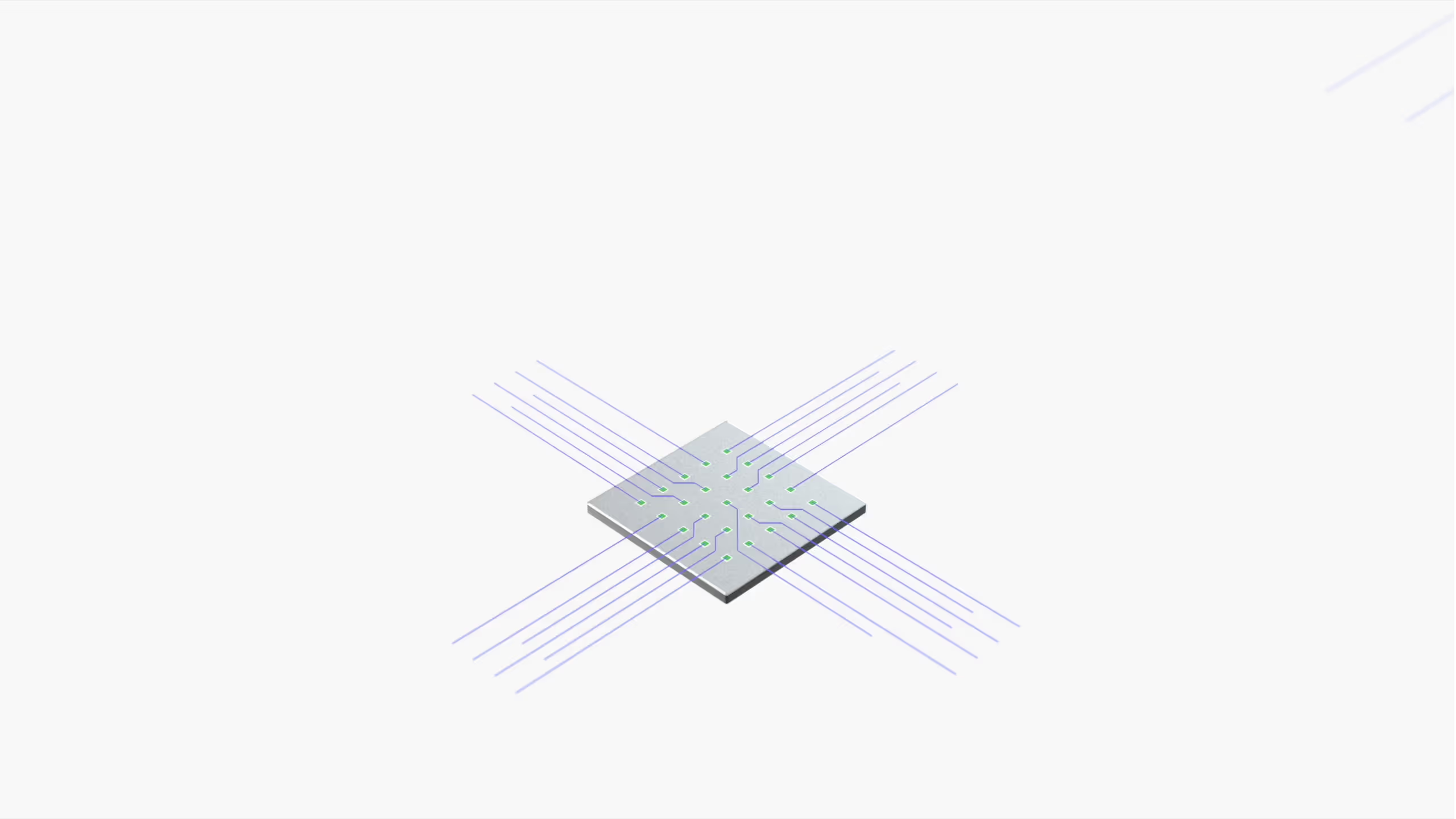
In today’s QPUs, almost 90% of the chip is consumed by signal routing, not qubits. Adding qubits forces denser routing, increases crosstalk, and erodes yield. These issues compound exponentially with every added qubit, which is why the entire industry has been stuck at 100-qubit processors for almost a decade.
Technology
VIO™
Hyperscaling
quantum processors
Hyperscaling
quantum processors
Quantum: the next leap in computing
01
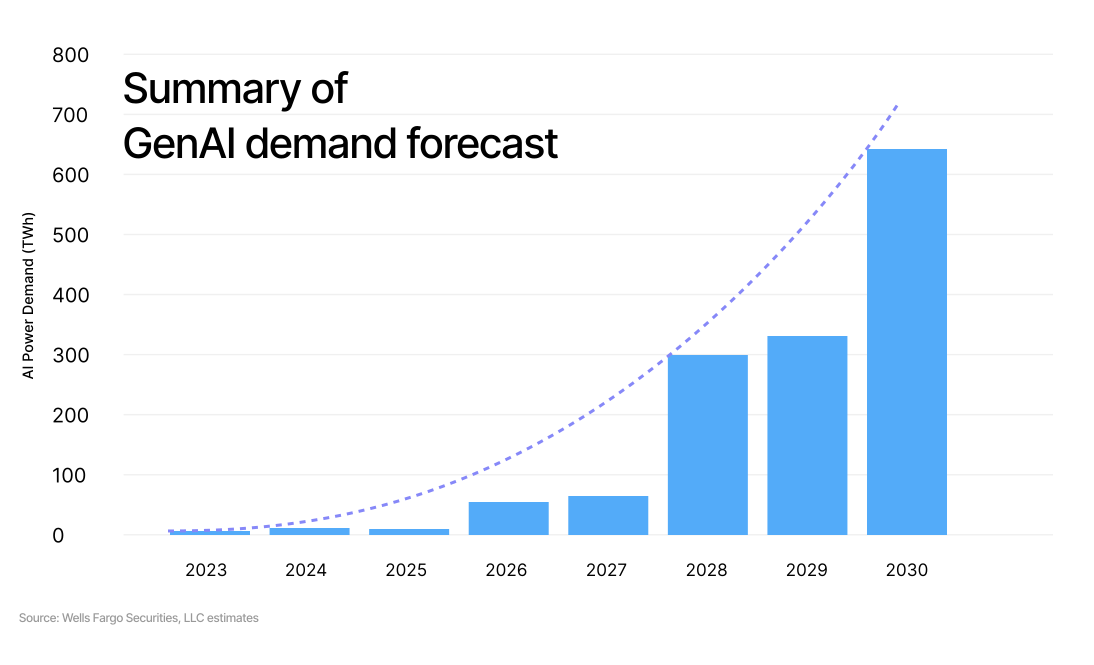
Demand for compute keeps rising exponentially, but classical systems are hitting physical and power limits.
Achieving the next leap in computing requires a fundamentally new approach.
Achieving the next leap in computing requires a fundamentally new approach.
GenAI power demand reaches 652 TWh in 2030.
For scale: average annual electricity use per U.S. household (2022).
For scale: average annual electricity use per U.S. household (2022).
0,000010791
TWh
Source: EIA - U.S. Energy Information Administration
02
Quantum applications
Quantum computers will unlock a new realm of computing, which no supercomputer can reach, even with infinite resources.
Revealing the structure of nature
Quantum computers naturally capture the butterfly-effect dynamics of chaotic quantum systems—recently demonstrated by Google’s 105-qubit Willow processor with verifiable quantum advantage.
This capability opens powerful applications in nuclear magnetic resonance (NMR), where simulating quantum “echoes” can sharpen molecular models and reveal protein and material structures beyond classical limits.
Nature 646, no. 8086 (2025): 825-830.

QPU scalability: the industry's largest bottleneck
01
Traditional QPUs have hit a hard scaling limit
02
Small QPUs can't make quantum computers
If QPUs stay small, a last resort for scaling is stitching together smaller QPUs over lossy and low-bandwidth links, possibly over multiple cryostats. With today’s QPU sizes, even a datacenter full of cryostats would not result in a powerful quantum computer. Without hyperscaling QPUs, networking alone will not deliver economically relevant systems.
VIO™: the breakthrough to finally solve QPU scaling
01
Vertical routing
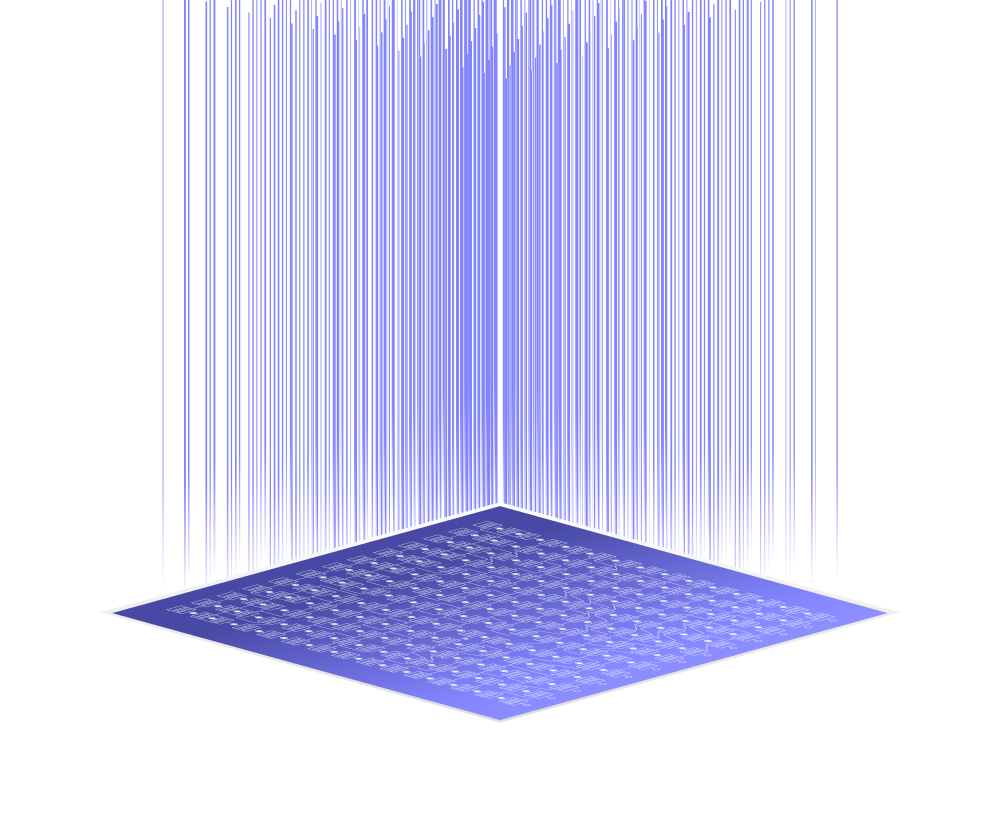
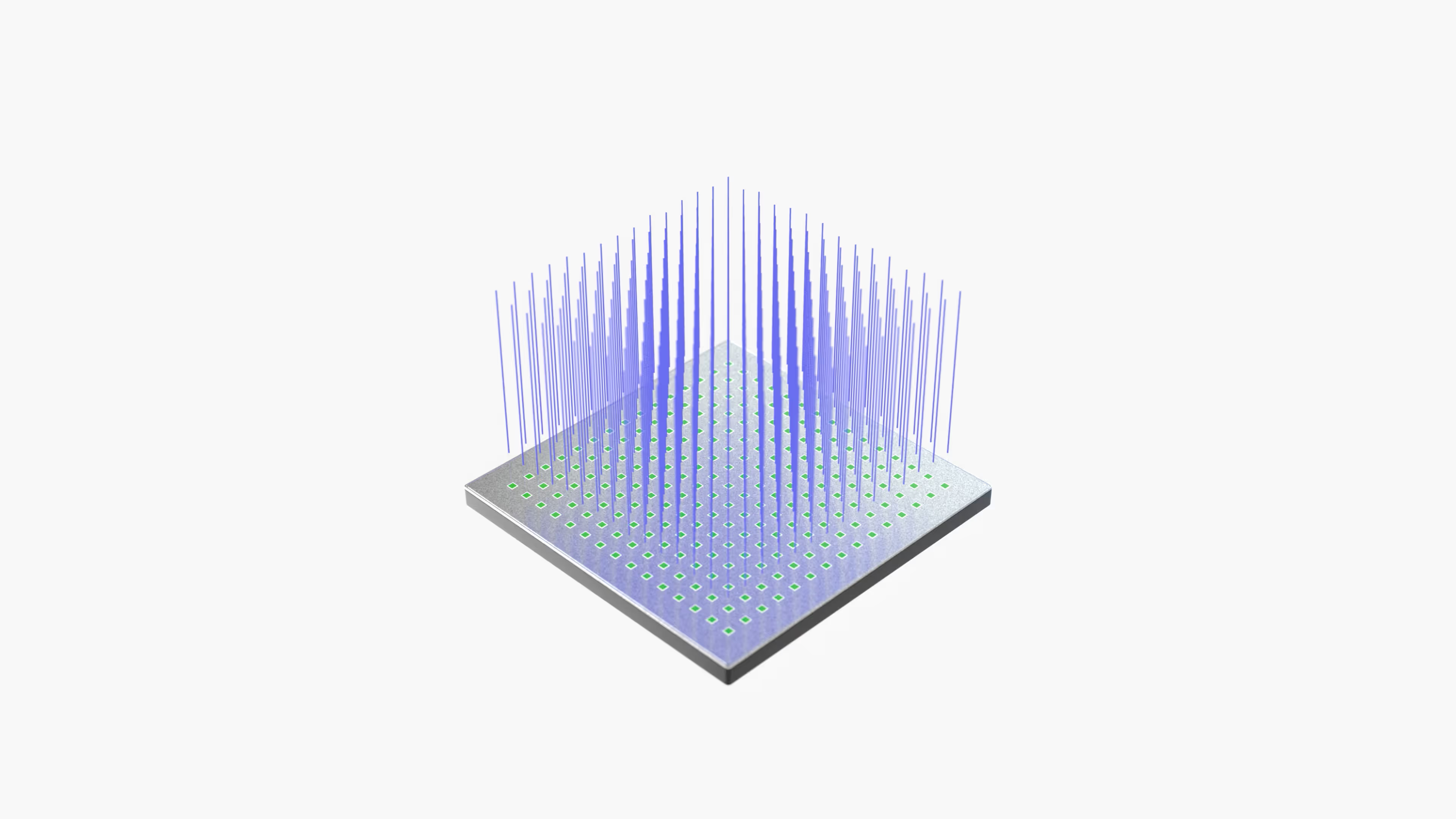
VIO delivers signals vertically to the qubits, removing the exponential fan-out and associated crosstalk that chokes 2D chips. With VIO, qubits can dominate the footprint and create much denser qubit chips.
02
One connected qubit plane
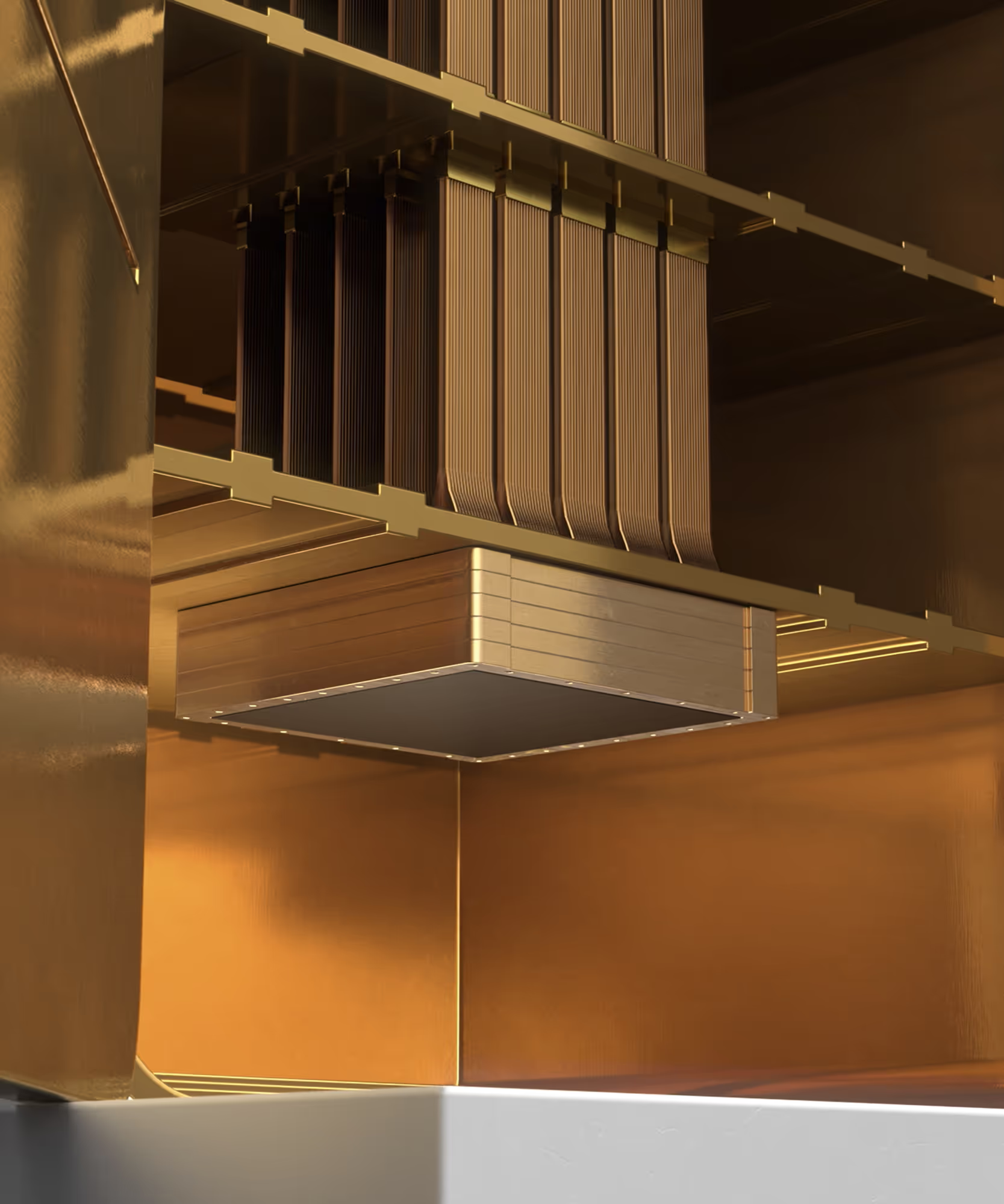
VIO scales modularly while still functioning as one unified qubit plane, because ultra high-fidelity chip-to-chip links seamlessly connect the edge qubits of each chip. The vertical signal delivery happens through a vertical chip stack, in which all signal conditioning components are directly integrated.
03
10,000 qubits in a single QPU, in a single cryostat
With up to 40,000 input-output lines, VIO-40K enables 10,000-qubit QPUs. Its architecture is optimized for high heat-transfer capacity, allowing the heat load of a 10,000-qubit processor to be managed within a single cryostat.

KiloFab: QuantWare’s industrial quantum processor production facility
The KiloQubit era requires industrial-scale production to drive down cost curves and move on from one-off hero devices in a lab. We’re building the world’s largest quantum open-architecture fab to deliver VIOTM at scale to the entire industry.
Timeline
Live in 2026
Location
Delft, Netherlands
Capacity
20x in production capacity compared to 2025